Which Output Signals Are Available in Industrial Liquid Flowmeters?
Release time: 2026-10-09
Table of Contents
Choosing an industrial liquid flowmeter involves more than checking its measuring range and accuracy. The output signal is also important because it determines how measurement data can be transmitted to monitoring equipment, control systems, and data acquisition devices. Different applications may require instantaneous flow readings, cumulative flow totals, or digital communication for remote monitoring.
Hefei Jingda Instrument Co., Ltd. manufactures various flowmeters and flow measurement and control systems. With a history connected to the former Hefei Instrument Factory, established in 1958, the company provides measurement solutions for industries that require reliable liquid flow data. Understanding the available output options helps buyers select industrial liquid flowmeters that meet their process monitoring and automation requirements.
Why Do Flowmeter Output Signals Matter?
A flowmeter measures the movement or quantity of liquid passing through a pipeline. However, the measured value must be communicated to an operator or another device before it can be used for monitoring, recording, or process control.
For example, a production line may need continuous flow information to maintain a stable supply of liquid raw materials. A batching system may need to record the total volume delivered during each production cycle. In these cases, the output signal affects how the flowmeter connects to the wider system.
When evaluating liquid flowmeter output signals, buyers should consider the following factors:
- Whether the application requires instantaneous flow rate, cumulative volume, or both.
- Whether the receiving equipment accepts analog signals, pulse inputs, or digital communication.
- Whether measurement data must be transmitted over a long distance.
- Whether several instruments need to communicate with a centralized monitoring system.
- Whether remote configuration or diagnostic functions are required.
Selecting a compatible signal from the beginning can simplify system integration and reduce the need for additional interface equipment.
Common Output Signals in Industrial Liquid Flowmeters
Different flowmeter models support different output configurations. The following options are commonly used in industrial liquid measurement.
4–20 mA Analog Output
A 4–20 mA signal represents a measured value through an electrical current. In a typical configuration, the lower and upper current values correspond to the configured measurement range.
This output is widely used for continuous monitoring because compatible PLCs, controllers, and data acquisition systems can read the signal and convert it into an engineering value, such as liters per minute or cubic meters per hour.
For applications that require a continuously updated flow reading, a 4–20 mA output can provide a straightforward connection between the flowmeter and the control system.
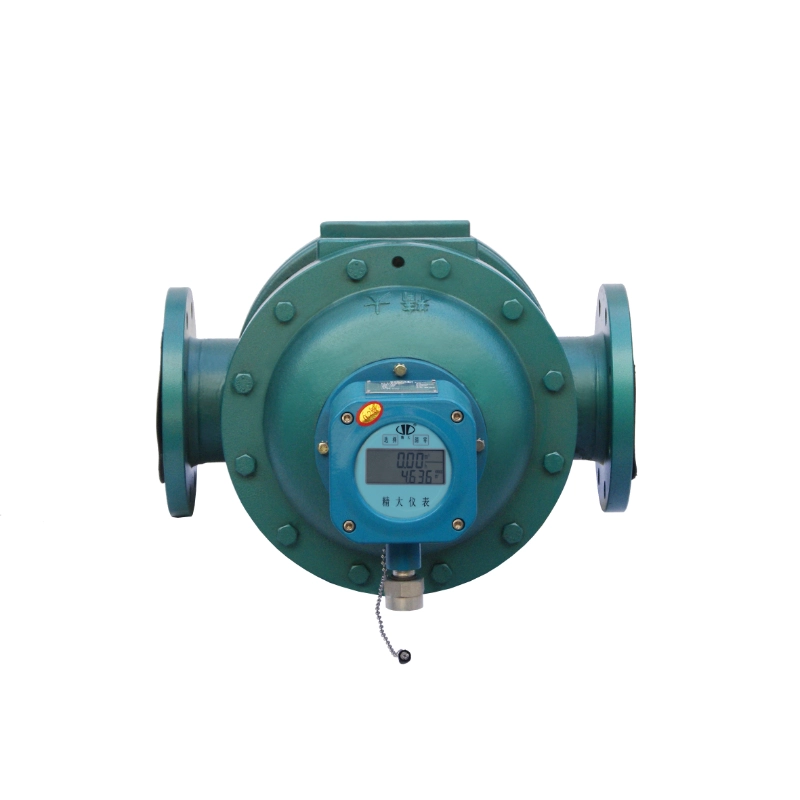
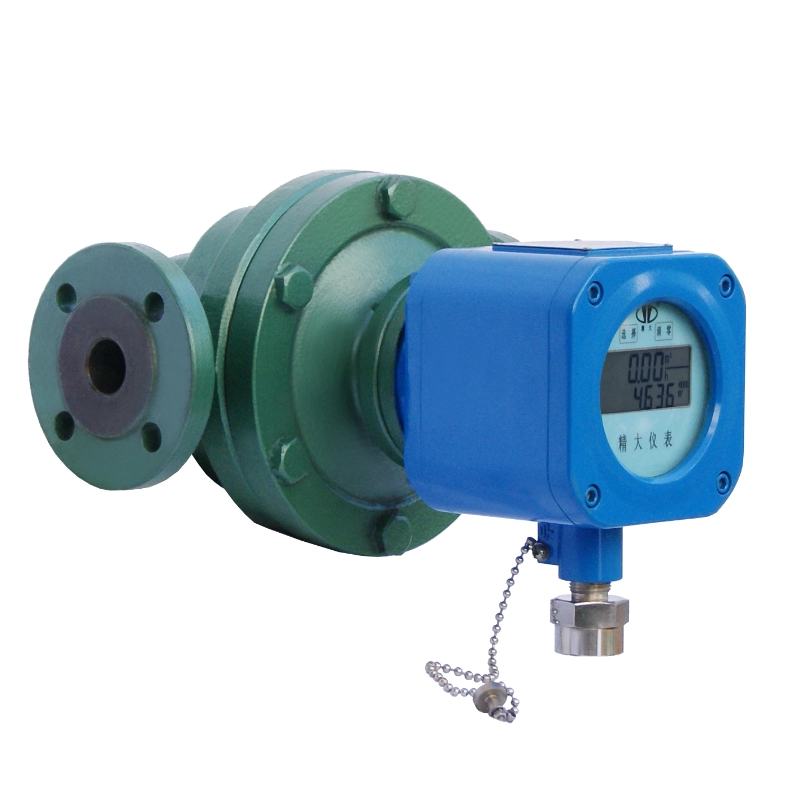
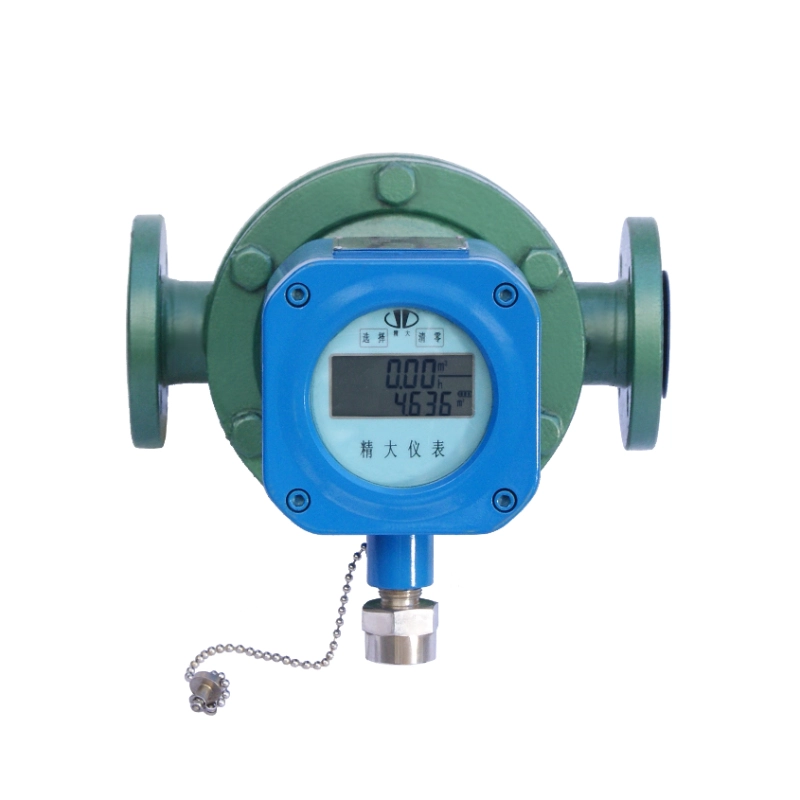
For example, Hefei Jingda’s metal scraper flowmeter supports a BMF analog signal transmitter with a 4–20 mA output. This provides a concrete option for projects that require an analog flow signal rather than pulse-only transmission.
Pulse and Frequency Output
Pulse output represents flow information through electrical pulses. Depending on the flowmeter design and configuration, each pulse may correspond to a defined quantity of liquid, allowing the receiving system to calculate cumulative volume.
Pulse signals can be useful in applications such as liquid dispensing, batching, consumption recording, and total flow measurement. Frequency output can also provide information related to the current flow rate when the instrument is designed and configured for that purpose.
The key consideration is the relationship between the output signal and the measured quantity. Buyers should verify the pulse factor, signal amplitude, maximum output frequency, and input compatibility before connecting a flowmeter to a counter or controller.
The metal scraper flowmeter from Hefei Jingda supports BGF pulse volume transmitters. Its published specifications list a pulse amplitude of 0.5–9 V for the BGF-I version and 1–20 V for the BGF-II version. These differences illustrate why the exact transmitter model matters when designing a signal interface.
RS485 Digital Communication
RS485 is a physical communication interface commonly used to connect industrial instruments with monitoring and control equipment. The communication protocol, such as Modbus RTU, determines how data is organized and exchanged between devices.
Compared with a simple analog output, digital communication can support the transmission of structured measurement data and may allow multiple compatible devices to share a communication network.
For liquid flow monitoring, RS485 can be useful when operators need to collect readings from instruments in different locations or integrate measurements into a centralized system. However, buyers should confirm the supported protocol, communication settings, wiring requirements, and available data registers for the selected model.
Not every flowmeter equipped with RS485 supports the same protocol or exposes the same measurement parameters. Compatibility should therefore be checked against the product’s technical documentation.
HART Communication
HART is a communication protocol that combines digital communication with a compatible 4–20 mA instrumentation loop. Depending on the instrument, it can support access to measurement information, configuration parameters, and diagnostic data.
This option may be useful when a plant already uses HART-compatible instrumentation and wants to access additional device information without replacing its existing analog monitoring arrangement.
Nevertheless, HART availability is model-dependent. Buyers should verify whether the selected flowmeter supports the protocol and which functions are available before including it in the system design.
Which Output Signals Do Different Flowmeters Support?
The available output options depend on the flowmeter model and its transmitter or converter configuration. The following examples illustrate the differences found in Hefei Jingda’s published product information.
| Flowmeter type | Published output options | Typical consideration |
| Metal scraper flowmeter | Pulse output; 4–20 mA analog output | Suitable for applications requiring liquid quantity measurement and remote signal transmission |
| Coriolis mass flowmeter | Current output, frequency output, RS485/Modbus or HART | Supports mass flow measurement and the communication of additional measurement parameters |
| Liquid turbine flowmeter | Pulse, 4–20 mA, HART or RS485, depending on configuration | Useful for transmitting flow information to compatible monitoring and control equipment |
| Oval gear flowmeter | Pulse, 4–20 mA, RS485 or HART, depending on configuration | Supports continuous liquid measurement with options for local indication and remote transmission |
The table is intended as a model-selection reference rather than a universal specification. Output availability can vary by model, transmitter, converter, and ordered configuration. Buyers should confirm the final technical details with the relevant product datasheet.
How to Choose the Right Output for Your Application
The most suitable output signal depends on how the measurement data will be used. Rather than selecting a flowmeter based on the number of available interfaces alone, buyers should start with the requirements of the application.
For continuous flow monitoring, a 4–20 mA output may be appropriate when the receiving controller uses analog inputs. For cumulative volume measurement or batching, pulse output may be a practical choice, provided the pulse factor and input specifications meet the application requirements.
Where the system requires digital data collection, RS485 communication may be worth considering. The supported protocol and data structure must match the monitoring software or control equipment. HART may be relevant for facilities that already use compatible instrumentation and need access to additional configuration or diagnostic information.
It is also important to check electrical compatibility. Signal amplitude, supply voltage, wiring arrangement, isolation requirements, and environmental conditions can all affect whether a connection will work reliably.
Before placing an order, buyers should provide the supplier with the receiving device model, required signal type, communication protocol, and expected measurement data. This allows the flowmeter configuration to be checked before installation.
Conclusion
Output signals are an important part of selecting industrial liquid flowmeters because they determine how measurement data can be transferred to monitoring and control equipment. Analog outputs, pulse signals, and digital communication interfaces serve different purposes, so the right choice depends on the measurement task and the system receiving the data.
Hefei Jingda Instrument Co., Ltd. offers flow measurement products with different output configurations, including the analog and pulse options documented for its metal scraper flowmeter and the communication options listed for its Coriolis mass flowmeter. By comparing the requirements of the application with the specifications of each model, buyers can select a suitable liquid flowmeter and establish a more compatible measurement system.
Frequently Asked Questions
1. What is the difference between analog and pulse output?
Analog output represents a measured value through a continuously varying signal, such as 4–20 mA. Pulse output uses electrical pulses to represent flow-related information, often for calculating cumulative volume.
2. Can a liquid flowmeter connect directly to a PLC?
It can when the flowmeter’s output type and electrical specifications are compatible with the PLC input. Signal type, voltage or current range, wiring, and configuration should be checked before connection.
3. Is RS485 the same as Modbus?
No. RS485 is an electrical communication interface, while Modbus is a communication protocol. An instrument may use RS485 as its interface and Modbus RTU as its protocol, but the actual supported configuration must be confirmed.
4. Do all liquid flowmeters support 4–20 mA and RS485?
No. Available outputs vary by model and configuration. Buyers should consult the specific product datasheet to confirm which signals and communication protocols are supported.