What Types of Liquid Flowmeters Does Hefei Jingda Offer?
Release time: 2026-09-27
Table of Contents
Liquid flow measurement is an important part of industrial process control, energy management, and pipeline operation. Different liquids have different properties, including viscosity, conductivity, temperature, and density, so no single flowmeter can meet every measurement requirement. This is why manufacturers and process operators use different types of liquid flowmeters for different applications.
Hefei Jingda Instrument Co., Ltd. is a modern enterprise reformed from the former Hefei Instrument Factory, which was founded in 1958. The company specializes in manufacturing various flowmeters, oil and gas measurement equipment, and flow measurement and control systems. As a high-tech enterprise and a member of the professional flowmeter industry, it has developed a broad range of measurement solutions for industrial applications.
What Are Liquid Flowmeters?
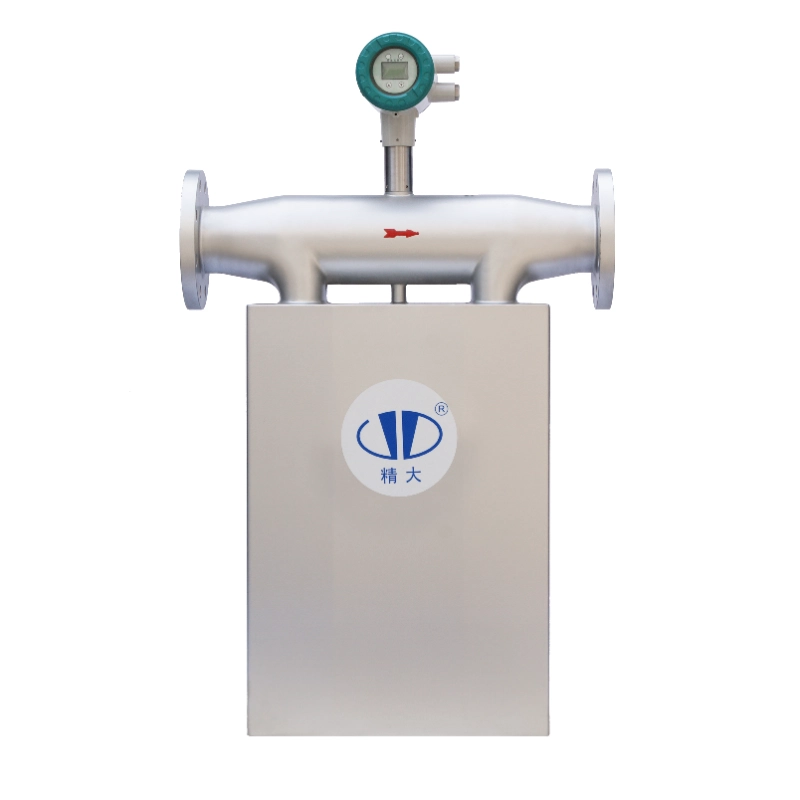
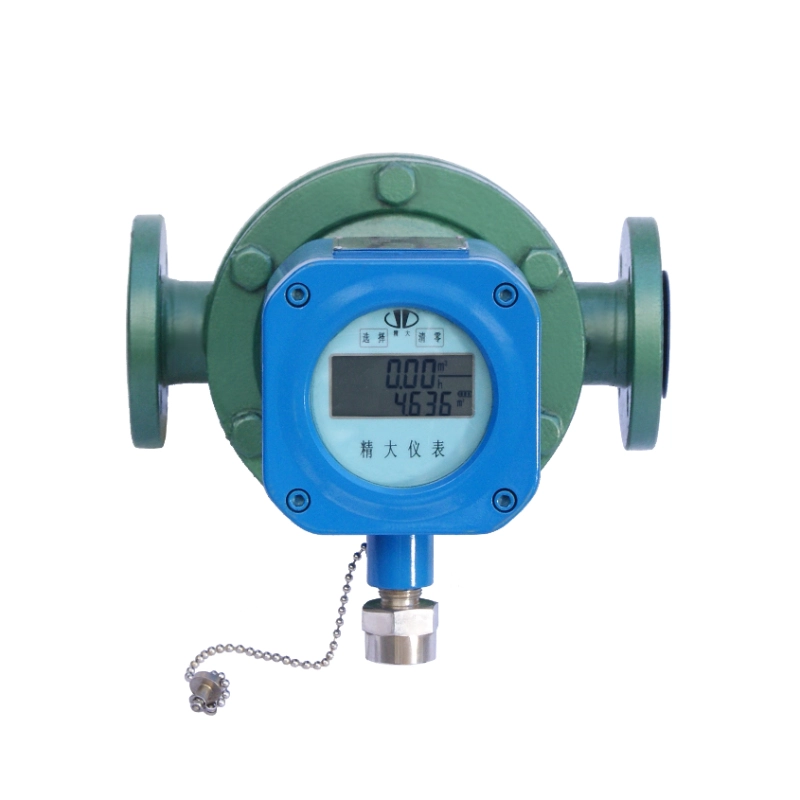
A liquid flowmeter is an instrument used to measure the flow of liquid through a pipeline. Depending on its operating principle, a flowmeter may measure volumetric flow, mass flow, or other related parameters.
The selection of measurement technology depends largely on the properties of the liquid and the requirements of the process. Clean, low-viscosity liquids may be suitable for turbine flow measurement, while high-viscosity liquids can require positive displacement technologies. Conductive liquids, corrosive media, and liquid-solid mixtures can be measured with electromagnetic flowmeters, while Coriolis technology can provide direct mass flow measurement together with density and temperature information.
For this reason, modern industrial systems often require several types of liquid flow meters rather than one universal solution.
What Types of Liquid Flowmeters Are Available?
1. Oval Gear Flowmeter
An oval gear flowmeter is a positive displacement instrument designed for continuous liquid flow measurement in pipelines. It uses rotating oval gears to divide the liquid into controlled volumes and determine the flow according to the gear rotation.
This type of flowmeter provides high measurement accuracy and good adaptability to changes in liquid viscosity. The oval gear design also allows it to handle applications involving relatively high-viscosity liquids. Depending on the configuration, it can provide 4–20 mA, pulse, RS485, or HART outputs.
The flowmeter can also be configured for higher-temperature applications, making it suitable for industrial processes where stable volumetric measurement is required.
2. Coriolis Mass Flowmeter
Unlike conventional volumetric flowmeters, a Coriolis mass flowmeter directly measures mass flow based on the Coriolis effect. It can also provide information on volume flow, density, and temperature.
This makes the Coriolis flowmeter particularly useful when accurate mass measurement is important. Its measurement accuracy can reach ±[0.2% + zero stability/instantaneous mass flow × 100%], while density measurement is also available.
The instrument supports 4–20 mA, frequency, RS485/MODBUS, and HART communication, allowing it to be integrated into modern industrial automation systems.
3. Gear Flow Meter
A gear flow meter is another positive displacement solution for liquid measurement. As liquid enters the measuring chamber, the pressure difference causes the gears to rotate. The liquid fills the spaces between the gears and is transported through the outlet as the gears continue to rotate.
This operating principle makes gear flowmeters well suited to applications involving high-viscosity liquids. They offer accurate volumetric measurement while maintaining a relatively simple mechanical structure.
With accuracy classes of 0.5 and 0.2 and multiple output options, this type of flowmeter can be used for industrial liquid measurement where stable and repeatable performance is required.
4. Graphite Scraper Flowmeter
A graphite scraper flowmeter is designed for high-precision volumetric measurement, particularly in refined oil applications. It can be used for gasoline, aviation kerosene, diesel, and other light fuels.
Its rotor rotates smoothly during operation, helping reduce pulsation and operating noise while maintaining stable measurement performance. It is also designed for applications requiring reliable measurement and repeatability in fuel and refined oil transactions.
For fuel-related processes where accurate volumetric measurement is essential, this type of flowmeter provides a specialized solution.
5. Metal Scraper Flowmeter
The metal scraper flowmeter is a positive displacement flowmeter designed for continuous or intermittent precision measurement of liquid flowing through pipelines.
Its double-shell structure and rotating rotor provide smooth operation with low pulsation and noise. The design also offers good adaptability to changes in liquid viscosity, together with a relatively large flow capacity and long service life.
With accuracy classes of 0.5 and 0.2, the metal scraper flowmeter can be applied to industrial liquid pipelines where reliable volumetric measurement is required.
Which Flowmeters Are Designed for Low-Pulsation and Stable Measurement?
6. Dual Rotor Flowmeter
The dual rotor flowmeter is designed for continuous measurement of liquid flow while maintaining low pulsation and extremely low operating noise. Its dual-rotor structure enables stable measurement and helps reduce pressure loss.
It offers a wide measurement range and good adaptability to liquid viscosity. The design can also be used for high-temperature and high-viscosity liquids when the appropriate high-temperature configuration is selected.
Accuracy classes of 0.5 and 0.2 are available, together with 4–20 mA, pulse, RS485, and HART outputs. These features make the dual rotor flowmeter suitable for industrial pipeline applications requiring stable and reliable flow measurement.
7. Roots Flowmeter
The Roots flowmeter is a volumetric flowmeter designed for continuous measurement and control of liquid flow in pipelines. Its operating principle is based on accurately measuring a defined volume of liquid as the internal rotors move.
The instrument combines high measurement accuracy with reliability, relatively light weight, and convenient installation. Accuracy classes of 0.5, 0.3, and 0.2 are available.
With 4–20 mA, pulse, RS485, and HART output options, the Roots flowmeter can also be integrated into industrial monitoring and control systems.
Which Liquid Flowmeters Can Handle Conductive or Corrosive Liquids?
8. LDJ Series Electromagnetic Flowmeter
The LDJ series electromagnetic flowmeter uses the principle of electromagnetic induction to measure the volumetric flow of conductive liquids. It is suitable for liquids with conductivity above 5 μS/cm.
One of its major advantages is its ability to measure challenging media, including strong acids, strong alkalis, and liquid-solid mixtures such as mud and pulp. This makes electromagnetic technology useful in industries including chemical processing, metallurgy, papermaking, environmental protection, food processing, municipal engineering, and water-related applications.
Different lining materials are available for different temperature and medium conditions. Depending on the configuration, the LDJ series can support medium temperatures from below zero to as high as 180°C.
For processes involving conductive, corrosive, or suspended-solid liquids, an electromagnetic flowmeter can provide a practical alternative to mechanical flow measurement technologies.
Which Flowmeter Is Suitable for Clean, Low-Viscosity Liquids?
9. Liquid Turbine Flowmeter
A liquid turbine flowmeter is a velocity-based instrument designed to measure the volumetric flow of clean, low-viscosity liquids through closed pipelines.
As liquid passes through the meter, the internal turbine rotates according to the flow velocity. The resulting electrical signal can be used to calculate instantaneous and cumulative flow. This makes the turbine flowmeter suitable for applications that require continuous flow monitoring and automation.
The instrument supports pulse, 4–20 mA, HART, and RS485 outputs, allowing connection with PLC and DCS systems. With an accuracy class of 0.5 or 0.2 and a medium temperature range of -20°C to +130°C, it can be used in a variety of industrial liquid measurement applications.
How Do These Flowmeters Differ?
Although all nine products are designed for liquid flow measurement, their measurement principles and suitable applications are different.
| Flowmeter Type | Main Measurement Principle | Suitable Application |
| Oval Gear Flowmeter | Positive displacement | Continuous liquid measurement and high-viscosity liquids |
| Coriolis Mass Flowmeter | Coriolis effect | Mass flow, density, and temperature measurement |
| Gear Flow Meter | Positive displacement | High-viscosity liquid measurement |
| Graphite Scraper Flowmeter | Volumetric measurement | Gasoline, diesel, aviation kerosene, and refined oil |
| Metal Scraper Flowmeter | Positive displacement | Industrial pipeline liquid measurement |
| Dual Rotor Flowmeter | Dual-rotor volumetric measurement | Low-pulsation and high-precision measurement |
| Electromagnetic Flowmeter | Electromagnetic induction | Conductive, corrosive liquids and slurries |
| Roots Flowmeter | Volumetric measurement | Continuous liquid flow measurement |
| Liquid Turbine Flowmeter | Velocity measurement | Clean, low-viscosity liquids and automation systems |
This range allows different flow measurement technologies to be matched with different process conditions instead of relying on a single measurement principle for every application.
Why Is Flowmeter Accuracy Important?
Accuracy directly affects process control, production efficiency, and liquid quantity management. In applications involving continuous production or commercial measurement, even a small measurement deviation can accumulate over time.
However, accuracy should not be considered separately from the operating conditions. Liquid viscosity, temperature, flow range, pressure loss, conductivity, and the presence of suspended solids can all influence the suitability of a particular flowmeter.
For example, a positive displacement flowmeter can be advantageous for high-viscosity liquids, while an electromagnetic flowmeter is more appropriate for conductive media. A Coriolis mass flowmeter is suitable when direct mass measurement and density information are required, whereas a turbine flowmeter is commonly used for clean, low-viscosity liquids.
Choosing the appropriate measurement principle is therefore essential for obtaining stable and reliable results.
How Can Different Flow Measurement Technologies Support Industrial Applications?
Different industries have different liquid measurement requirements. Petroleum and fuel applications may require precise volumetric measurement for refined oil products. Chemical processes can involve corrosive or conductive liquids that are better suited to electromagnetic measurement. Other industrial processes may require high-viscosity liquid measurement, mass flow measurement, or integration with PLC and DCS control systems.
The combination of positive displacement, Coriolis, electromagnetic, turbine, and other volumetric technologies provides flexibility for these different operating conditions.
As a result, high-accuracy liquid flow meters are not limited to one specific industrial sector. They can be applied wherever reliable measurement and process monitoring are important.
Conclusion
The main types of liquid flowmeters differ in their measurement principles, accuracy, liquid compatibility, temperature range, and communication capabilities. Oval gear, gear, graphite scraper, metal scraper, dual rotor, and Roots flowmeters focus mainly on volumetric measurement, while Coriolis technology provides direct mass flow measurement. Electromagnetic flowmeters are designed for conductive liquids and challenging media, while turbine flowmeters are well suited to clean, low-viscosity liquids.
With experience dating back to the former Hefei Instrument Factory founded in 1958, Hefei Jingda Instrument Co., Ltd. specializes in flowmeters, oil and gas measurement equipment, and flow measurement and control systems. The company has also been recognized as a China High-tech Enterprise, while its “Jingda” trademark was awarded the famous trademark of China. Its broad product range provides different flow measurement technologies for industrial applications with varying liquid properties and process requirements.