Intelligent Industrial Electromagnitic Flowmeter LDJ Series Solution
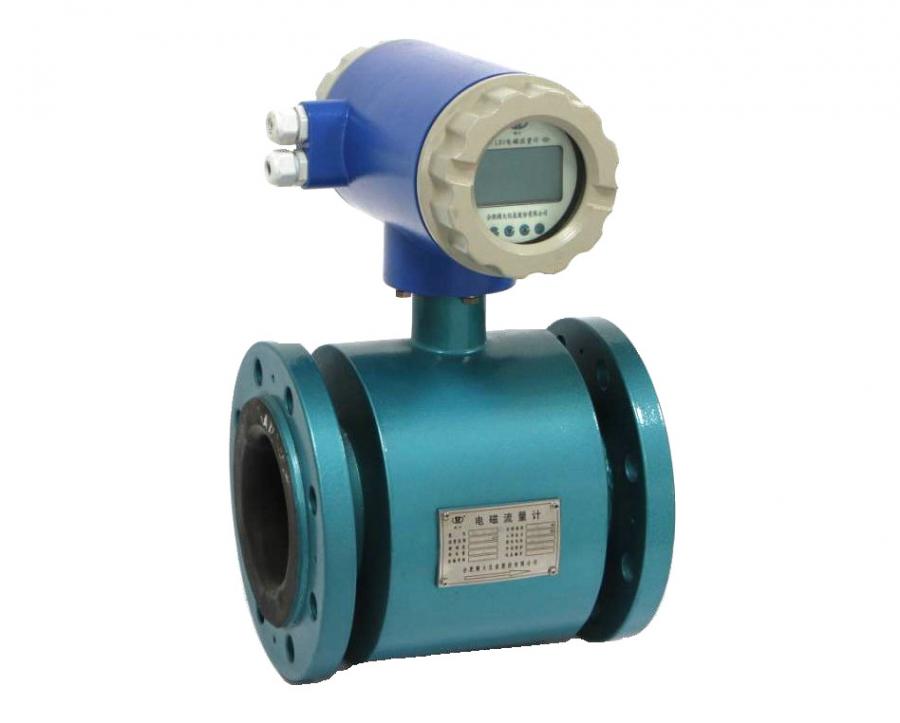
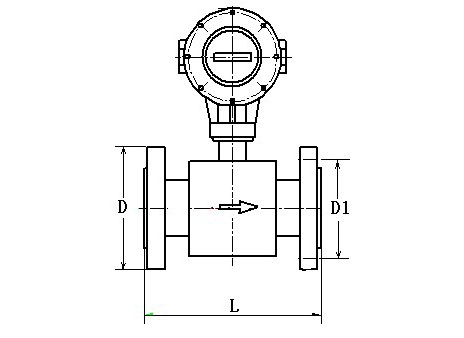
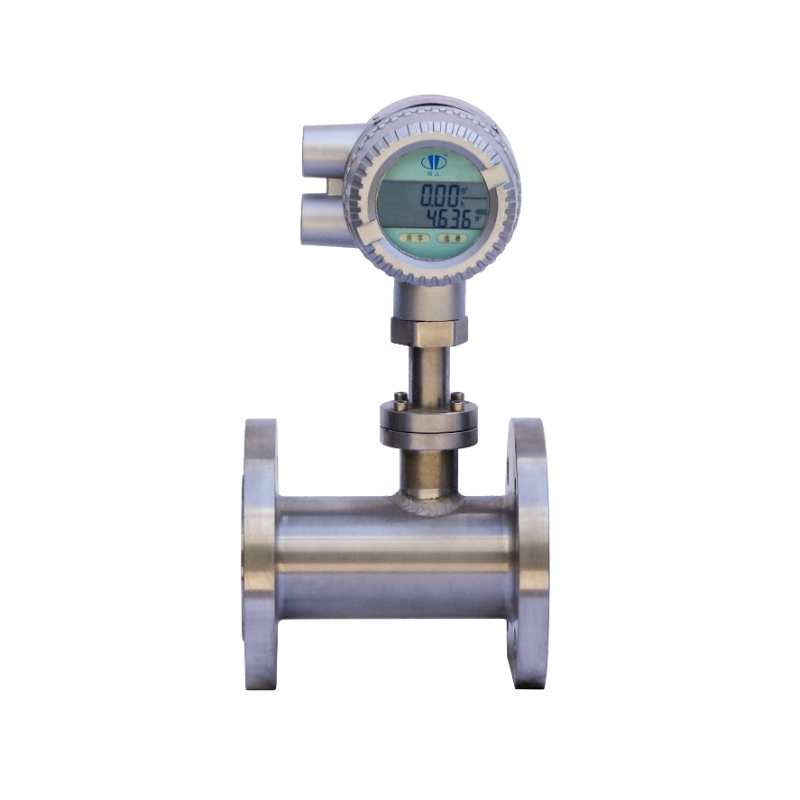
1.LDJ series electromagnetic flowmeter is composed of sensor and converter.
2.LDJ series electromagnetic flowmeter works on Faraday's electromagnetic induction principle, used for the measuring of volumetric flowerets of liquid whose conductance is greater than 5u S/cm.
3.LDJ series electromagnetic flowmeter also can measure the corrosive liquids as strong acid, alkalietc.and two phase(Liquid-solid) suspensions as mud,one pulp, paper pulp, etc., it is widely applied in the field of petroleum, chemical industry, metallurgy, textile, papermaking, environmental protection,food and municipal administration,irrigation project.river dredge ect.
Working principle of the LDJ series electromagnetic flowmeter is based on Faraday’s law of electromagnetic induction.
When a conductive fluid flows through a measuring pipeline surrounded by a magnetic field, an induced electromotive force E proportional to the average flow velocity V is generated in the direction perpendicular to both the flow direction and the magnetic field. The induced electromotive force is detected by a pair of electrodes and expressed as follows:
E=KBDV
K: Proportional constant;
B: Magnetic flux density;
D: Measure the inner diameter of the tube;
V: Measure the average flow velocity within the cross-section of the measuring tube
After signal E is processed by a converter, it outputs a frequency pulse signal proportional to the flow rate and an analog 4-20mADC current for subsequent instruments (such as flow display integrators, controllers, etc.) to complete flow detection and control tasks.
Product Features:
1.No movable parts, the instrument works very stably and reliably.
2.On site, the range can be modified according to user needs.
3.No obstruction components, no pressure loss during measurement.
4.The intelligent converter has a good human-machine interface and multiple application functions.
5.The measurement results are independent of physical parameters such as temperature, density, pressure, viscosity, etc. of the medium.
6.Integrated structure, easy to install and use. According to the needs, a split structure can be used. (Commonly used for large caliber meters or installation in trenches)
Application area:
Electromagnetic flow meters are suitable for measuring the flow of various conductive liquids, such as tap water, sewage, mud, pulp, various beverages, chemical raw materials, viscous liquids, and suspensions.
Temperature of the tested medium: -20 to+65 ℃ (rubber)- 20~+160 ℃ (PTFE)- 60-180 ℃ (soluble polytetrafluoroethylene)- 20~+160 ℃ (perfluoroethylene propylene) Work pressure: see data sheet. The excess pressure can be specially supplied Minimum conductivity: 5 μ S/cm Output signal: 4-20mADC proportional to flow rate, frequency and pulse quantity Network function: optional MODBUS RS-232C、RS-485、REMOTE(HART)。 Intelligent converter: The electromagnetic flowmeter converter has the following functions: On site LCD display: Instantaneous and cumulative flow are displayed on the same large LCD screen; Self checking and self diagnostic functions such as conductivity measurement and excitation current measurement; 0-5000Hz pulse output; Forward and reverse flow output; Multiple alarms; RS-485, Remote (HART) communication interface Requirements for straight pipe section: upstream ≥ 5DN, downstream ≥ 2DN Power supply: 220VAC, 50Hz or DC 24V Connection method: flange connection, the flange conforms to The provisions of GB/T9115-2000 Environmental temperature:- 20~+80℃ Relative humidity: 5% to 95% Power consumption: ≤ 10W Protection level: Integrated IP66 Explosion proof grade: Ex deia Ⅱ CT4~T6Gb
Signal Transmission for Liquid Flow Meters:
Reliable Remote Signal Output for Liquid Flow Measurement Liquid flow meters are widely used in water treatment, chemical dosing, food processing, and industrial pipelines. To meet modern monitoring requirements, liquid flow meters are equipped with multiple signal transmission options for long-distance and real-time data collection.
4–20 mA Analog Output: Provides stable and interference-resistant transmission over long distances. Ideal for continuous liquid flow monitoring and integration with PLC and DCS systems.
Pulse / Frequency Output: Suitable for total flow calculation, batching systems, and water consumption measurement in municipal and industrial applications.
RS485 with Modbus RTU Protocol: Enables digital communication for accurate remote monitoring. Supports multi-point networking and centralized data acquisition.
HART Communication (Optional): Allows remote configuration, diagnostics, and calibration without interrupting operation.
Application Value:
Real-time liquid flow monitoring
Reduced manual meter reading
Improved data accuracy and traceability
Automation Capability of Liquid Flow Meters:
Seamless Integration into Automated Liquid Control Systems
Liquid flow meters play a key role in automated process control, especially where precise flow regulation is required.
Fully compatible with PLC systems (Siemens, Schneider, Mitsubishi, Allen-Bradley, etc.)
Supports SCADA and DCS platforms for centralized control and visualization
Enables automatic valve and pump regulation based on real-time flow feedback
Suitable for closed-loop control in dosing, mixing, and filling processes
Automation Benefits:
Improved process stability
Reduced operator intervention
Enhanced production efficiency and repeatability
IoT & Smart Monitoring for Liquid Flow Meters:
Smart Liquid Flow Measurement with IoT Connectivity
IoT-enabled liquid flow meters allow users to monitor liquid flow data anytime and anywhere.
Wireless Communication Options: NB-IoT, LoRaWAN, Wi-Fi, or Ethernet (depending on configuration)
Cloud Platform Integration: Flow data is transmitted to cloud servers for real-time access, historical analysis, and reporting.
Remote Monitoring Dashboard: Displays instant flow rate, cumulative volume, alarm status, and system diagnostics.
Predictive Maintenance Support: Data analytics help detect abnormal flow patterns, leaks, or blockages early.
IoT Advantages:
Centralized liquid flow management
Lower maintenance costs
Support for smart factories and digital water systems